Writing
A collection of thoughts, research, and reflections spanning technology, sound, community, and social change.
A collection of thoughts, research, and reflections spanning technology, sound, community, and social change.
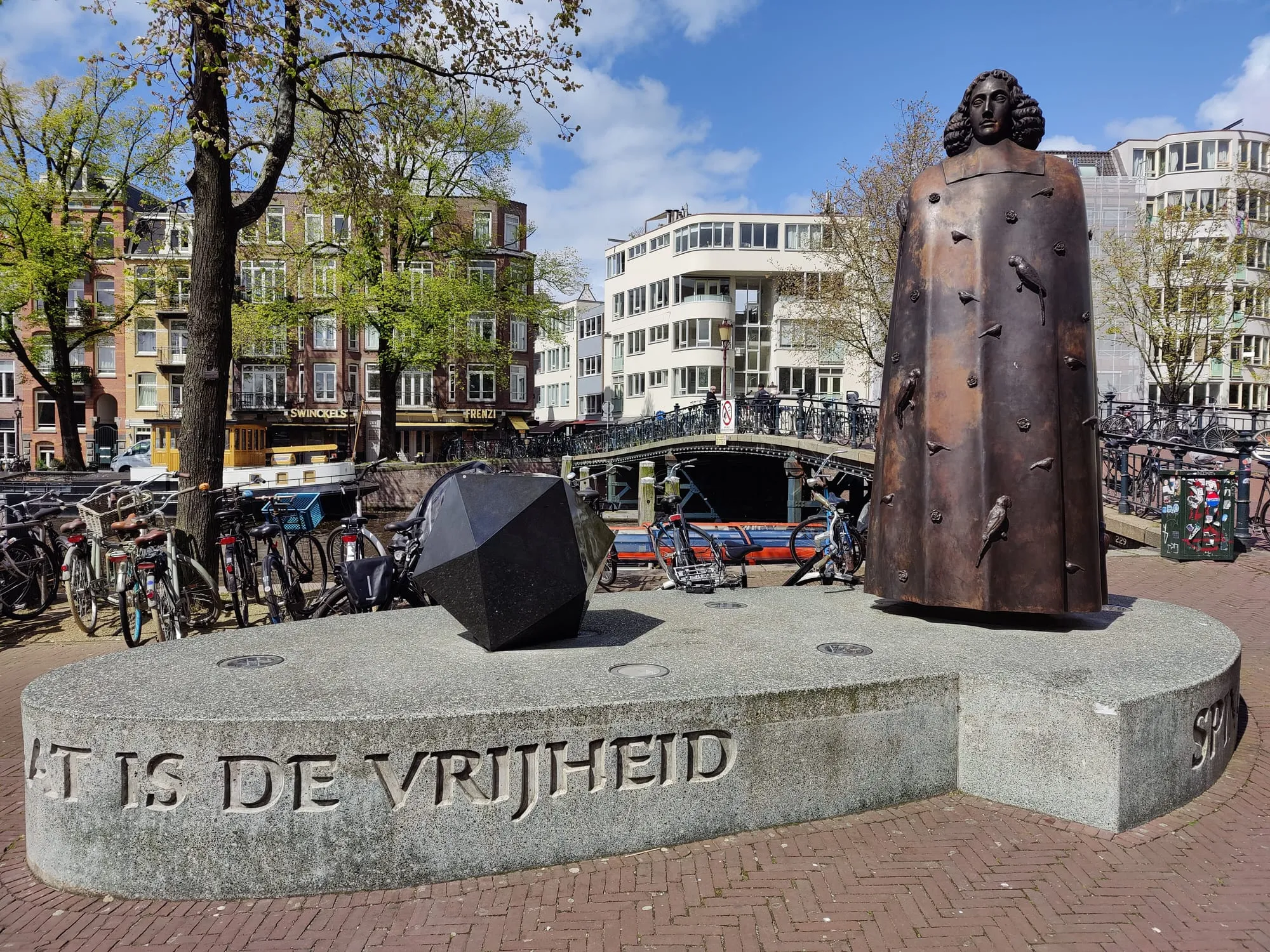
We've spent nearly a decade doing community technology work and tried to write it down it in about fifteen different ways. This is attempt sixteen: our honest takes on digital inclusion, co-production, and why the best community organising rarely looks like what funders want to fund.
Opens externally
If you've hung around us the last few years you undoubtedly will have heard us go on about PlaceCal. But what is it, why does it matter, how can you and your community benefit, and why has it taken us so long? Kim takes it from the top and outlines our ambitions for community technology in 2026.
Opens externally

just kidding ........ unless ?? 👀 💰 💻 🧑🎨. A run-down of the 15 ways we could think of to get funding for your project: from the capitalist (venture capital) to the grassroots (direct donations). We cover the various types of community, arts, research and business funding, and even mention DAOs.
Opens externally

Five years ago, I calmed myself with the words 'What a silly year!'. Half a decade later, this still applies.
Opens externally

"I'm so excited that you reached out! I love your work and it means a lot that this project connects with your practice and your communities."
Opens externally

We emerged out of a dream to build a digital sharing platform for the world, building off the back of the success a great foodsharing platform for German-speaking regions.
Opens externally

We shouldn't need platforms owned by the biggest losers on the planet to live happy, healthy, connected lives.
Opens externally

Technology, on the whole, promises to make our lives happier, better and more connected. But if you look around, it feels like a lot of technology actually delivers exhaustion, isolation and a feeling of being spied on.
Opens externally

It's a platform that maps community, social justice and environmental groups in a local area. These maps are created and maintained by the people who live there.
Opens externally

The question we get the most on the Discord is simply 'how do I get started with a web presence?' As you might expect, there are a plethora of options out there today.
Opens externally

Over the last year we administered a fund for trans organisers in Greater Manchester. We used this as an opportunity to research the priorities, goals, barriers and experiences of trans organisers on the ground.
Opens externally

Key findings from our National Lottery Community Fund funded project. What we've learnt, what we've done, what we want to do, what's next.
Opens externally

Two ways of working we've identified through our collaborative practice. Some people work best iteratively and some would prefer to forge ahead alone – but how do we ensure these approaches play nicely together?
Opens externally

"The singularity" is a well-worn concept in sci-fi. What if the really scary thing isn't an AI that takes over everything, but rather one that is exactly stupid enough it can happily take over the boring office jobs for the rest of time?

Something I've noticed a lot recently when thinking about what events I want to go to is if I think the reason for going is the event itself, or the people who are at the event.

We are a small community tech studio doing mostly publicly funded community sector work. We've been running a Mastodon server since November 2022.

It should be easy (low emotional labour, low technical labour, zero cost) to start a project with a small group of people with shared goals.

I've always had a complicated relationship with art. More specifically, I've always had a complicated relationship with knowing if what I make is art or not.

'Community' is a concept at the heart of a lot of the work I've done over my life. I think for most people most of the things that bring them happiness and allow them to assert their identity are through ideas of community and family.

Computers have been fully embedded into the operations of daily life for at least thirty years at this point. In this historically relatively short time they've utterly integrated into capitalism, but almost all our working metaphors are still based on physical things.

BMI, or "body mass index", is a very old — and famously completely fucked — health metric.

Sometimes we make things you can hold in your hands. Sharing a collection of publications we've made over the years and announcing a new collaboration with Pen Fight to distribute them.
Opens externally

It feels suuuuper cliche to write a piece on estrogen as a transfemme who recently started HRT but the politics around the representation and technology of it are utterly fascinating to me.

We don't really see fax machines so much nowadays but they were a really magical and fun invention when I was a kid.

Go is my favourite board game. I got really into it in my 20s and was dedicated enough to go pretty regularly to an IRL group in a pub a fairly long bus ride away.

When a measure becomes a target, it ceases to be a good measure.
How we are going to transform the relationships between people, technology and place over the next two years, thanks to The National Lottery Community Fund.
Opens externally
David Hayward and Rachele Evaroa join Kim to talk about the infiltration of all our social lives by Facebook, and how things are probably worse for venues now than they were 10 years ago.
Opens externally

By popular demand our first episode 'How government technology limits who we can become' is out today. Mallory Moore, Zara Manoehoetoe, and Dr Kim Foale discuss technologies of state and empire.
Opens externally

Our presentation from Electromagnetic Field Festival 2022. On the surface of it it seems simple: tech types have skills, and community groups have unmet needs. Why does it feel so hard?
Opens externally

A first look at our new zine on making events more inclusive for everyone. When we asked our collaborators for affirming experiences at events we heard 'the best I've had is mediocre.'
Opens externally

Co-designing a local history archive with Oldham residents. We are currently in the early stages of working on a number of local history projects.
Opens externally

Now not only do we have several companies here who manufacture or assist in the production of nuclear missiles and submarines, we put 'em in the regional marketing brochure.
Opens externally

The most important question to ask whenever you are developing software is: should this be connected to the internet at all? And if it should be, how do we minimise the amount of data we store to do so?
Opens externally
A new space for trans community enabled by technology and collaboration. We're really proud to finally launch The Trans Dimension, a new online community hub connecting trans communities across the UK.
Opens externally

Analysis revealing a discrepancy between Greater Manchester Police's public claims about declining Taser use and actual Home Office data showing usage at more than double the rate claimed.
Opens externally

We've been working on imok for a while, and are glad it's now ready for public use. It's a simple bot designed to support people undertaking potentially risky activities.
Opens externally

Due to the massive amounts of money and hubris that reside in the tech sector, we now seem to believe that the same methodology used to sell pens that write upside down can somehow be adapted to fixing homelessness.
Opens externally

Comprehensive examination of Taser deployment risks, highlighting concerns about accountability gaps and potential for serious injury or death. We advocate for the abolition of tasers.
Opens externally

When starting a new community group or campaign of any type, one of the first things to get right is group communication. Despite dozens of tools claiming to sort out this kind of thing, in my experience nothing beats an email list.
Opens externally

There's a lot of discussion about co-production, co-design and other impressive-sounding terms starting with 'co-' at the moment in tech circles. This article revisits Arnstein's 'Ladder of Citizen Participation'.
Opens externally

We discuss how a capability approach to information technology in neighbourhoods with low social capital can create embedded and sustainable Community Technology Partnerships.
Opens externally

PlaceCal is a package of calendar software, education and community development. It makes it easier for residents to publish events, find information about their area, and see how to get involved in local groups.
Opens externally

Looking back on how PlaceCal came to be. How do we help local communities publish their events collectively?
Opens externally

The shift in internet and technology culture over the last decade has been phenomenal. And yet despite all this technology that's supposed to bring us together, social isolation is a major player in the current epidemic of depression and loneliness.
Opens externally

I really hate victory points (VPs) as a game mechanic.

We have the data, but who is listening? How can we hope to solve social problems using open data when we're having trouble getting any kind of progress on social issues that have been widely documented for decades?
Opens externally

User stories are meant to be non-fiction. We should not be in the business of giving any more airtime to fictional user stories than we need to, given how easy it is to gather them.
Opens externally

Manchester's pivotal role in the industrial revolution has been written about extensively -- what can we possibly learn from the baths and wash-houses of the time that we don't know already?

I'd never heard of Paul Graney before Tuesday. In Central Library, as part of Manchester Histories Festival, I learnt about a man curiously absent from any number of histories.

Dear Friend is a letter-writing project celebrating women in public life and struggles for liberation.

Most obviously, a factory is a place: a building where products are assembled on a production line.

A week's gone by and I'm wondering why I've spent it transcribing an enormous legal document from 1855. What does a huge certificate from 1855 have to do with the history of Hulme?

There has been an explosion in the use of maps to visualise data, prompted by the rise of the "data scientist", available open data, and a wealth of new tech tools.

It is strange to think that the poplar trees in Hulme Park were planted as part of an effort to make the area around the Hulme Crescents greener and more hospitable.

Civilization was one of the first computer games I really learnt anything from.

Art Of Noises is a game of abstract musical performance for 3-5 people. Players take the role of avant-garde performers, attempting to communicate various nouns, verbs and adjectives using a variety of toy instruments.

In this article I'm going to talk about how both the ability to create sound and the ways that we hear it are bound up in social power: affected by gender (on an inter-personal level) and patriarchy (on a political level).

For me, one of the most frustrating things about any kind of vaguely nerdy fandom is the application of what I can only describe as selective imagination.

This World Cup, I've been quite surprised to find myself really enjoying the football -- but only when England lose. Why is this?

PhDs take years, are an "original contribution to knowledge", and are generally paid for by the taxpayer.

I've been pointed by a few people now towards I Side With as a policy guide. This site is extremely poorly sourced.

Dug out some recordings of a noise/experimental night at Ladyfest Leeds in 2007, recorded in Holy Trinity Church.

Like many others this week, I was amazed to find out that someone moved in next to an iconic Manchester music venue, and then complained about the noise. What were they thinking?

How can very large collections of audio data be quickly and easily searched and catalogued?

These are some field recordings I made in 2007 as part of my BA(Hons) dissertation.

Arbor.js is a great little library that lets you make visual thesaurus style springy node diagrams using JSON network descriptions.

I've bounced the ideas in Sounds and the web off a few people now and had some very valuable feedback.

Generally speaking, I think the web handles audio very badly.